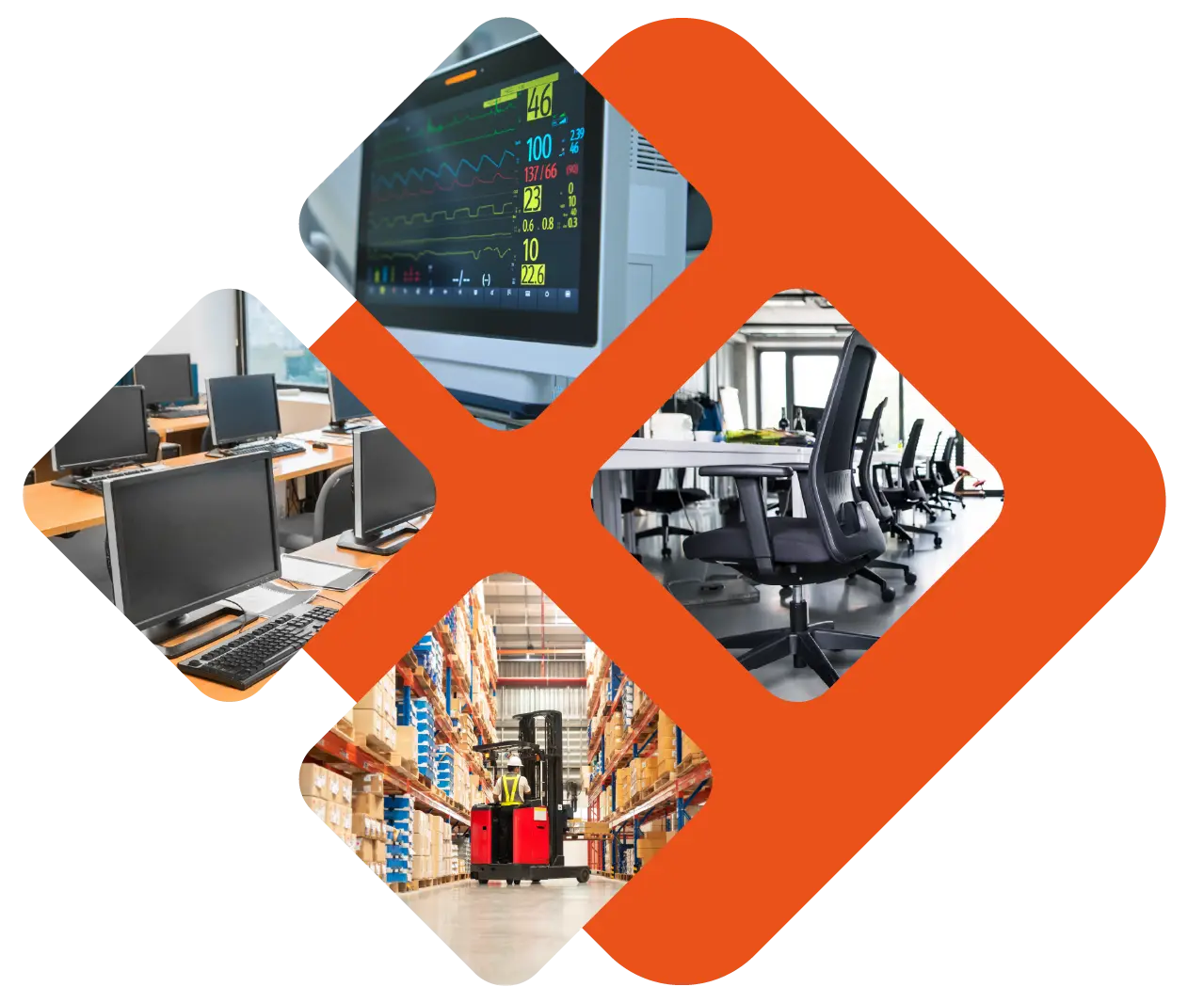
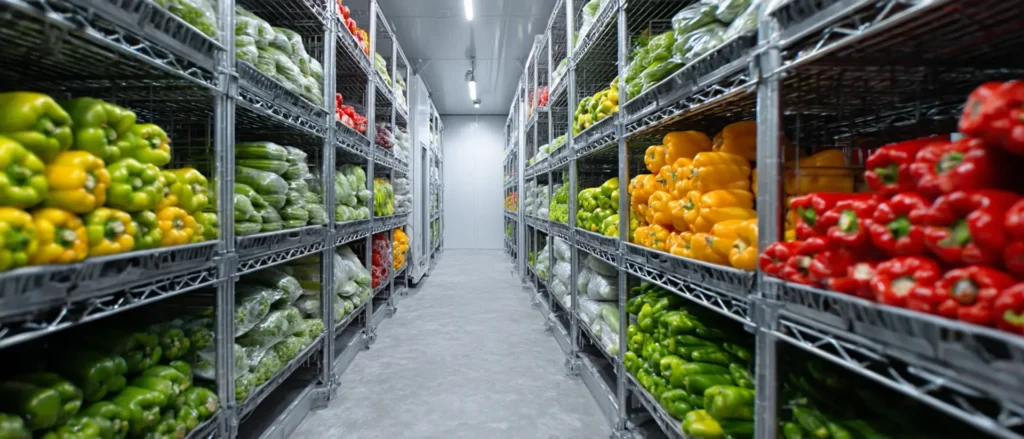
In the vast ecosystem of logistics and supply chain management, dry storage forms the backbone of the Saudi economy. Unlike temperature-controlled facilities that grab headlines, the majority of goods—from electronics and textiles to packaged foods and construction materials—rely on clean, secure ambient environments to prevent damage from the Kingdom’s extreme heat, pervasive dust, and humidity fluctuations.
As Saudi Arabia powers toward its Vision 2030 goals, the logistics hubs of Riyadh, Jeddah, and Dammam are undergoing massive transformations. The warehousing and logistics market is projected to reach $38.8 billion by 2026, growing at a CAGR of 5.85 percent. For businesses operating in these cities, choosing the right storage partner is not just about space—it is about regulatory compliance (SFDA), supply chain efficiency, and product integrity.
This guide explores the dry storage landscape of Riyadh and the broader Kingdom, market growth drivers, and why Units is the top company for flexible, tech-driven warehousing across Saudi Arabia.
Dry Storage: The Backbone of a Resilient Supply Chain
Dry Storage refers to warehousing facilities that maintain stable, controlled ambient conditions to protect goods from the specific threats of the region. With the Saudi warehousing market evolving rapidly, the shift toward “smart” facilities is accelerating.
Market Size and Growth
Saudi Arabia’s dry logistics and warehousing market has shown steady growth and is poised for significant expansion. According to sector reports, the Kingdom is expected to invest $87.20 billion in various economic projects till 2025, heavily boosting the industrial and logistics sectors.
Key Market Statistics:
| Indicator | Value |
|---|---|
| Total Warehouses in Saudi Arabia (2023) | 12,451 covering 22.8 million sq m |
| Riyadh’s Share of Warehouses | 52.9% (10.6 million sq m) |
| General Warehouse Licenses | 6,923 (55.6% of total) |
| Humidity-Controlled Warehouses | 2,115 licenses (17% of total) |
| National Warehouse Occupancy | 97% (mid-2024) |
The industrial and logistics sectors are key components of the Kingdom’s Global Supply Chain Resilience Initiative (GSCRI), which aims to attract SAR 40 billion ($10.6 billion) in investments. This growth is driving demand for higher-quality assets, including modern dry storage facilities equipped with automation, IoT monitoring, and energy-efficient systems.
What Defines Modern Dry Warehousing
Modern dry warehousing is defined by critical features that go far beyond standard sheds:
- Smart Monitoring (IoT): Professional facilities deploy electronic sensor networks that provide 24/7 data on temperature and humidity to prevent heat damage and mould.
- SFDA Compliance is Non-Negotiable: For businesses handling food, cosmetics, or pharmaceuticals, the Saudi Food and Drug Authority (SFDA) has issued a technical regulation for “Dry and Canned Food Storage Facilities”. Any warehouse storing SFDA-regulated products must hold a warehouse license and follow Good Distribution Practice. Failure to comply can result in fines up to SR10 million and facility shutdown.
- 24/7 Security: Given the high value of electronics, spare parts, and luxury goods, comprehensive CCTV and strict access control are standard expectations.
- E-Commerce Ready: With e-commerce growing rapidly (74% during March-April 2020 alone), modern warehouses must be equipped to handle fast order processing, efficient picking, and seamless integration with online retail platforms.
Products Ideal for Dry Warehousing
- Electronics & Accessories: Sensitive components require dust-free, static-controlled environments
- Non-Perishable Foods: Canned goods, rice, spices, and dry ingredients (SFDA certification required)
- Cosmetics & Personal Care: Stability is maintained by shielding products from extreme temperature swings
- Textiles & Apparel: Fabrics need protection from moisture to prevent mildew
- Spare Parts & Tools: Rust and corrosion are prevented via effective climate control
- Furniture & Household Items: Protection from dust, heat, and pests
Dry Storage in Riyadh: The Capital’s Logistics Hub
Riyadh, the capital and commercial heart of Saudi Arabia, is currently the epicenter of the warehousing boom. The city dedicates 24.5 million square meters to warehousing and logistics parks, primarily near Riyadh’s dry port. With rapid population growth and the rise of e-commerce platforms, the demand for logistics facilities that offer more than just four walls has never been higher.
Riyadh’s Dominance in Warehousing
Riyadh accounts for 52.9 percent of the Kingdom’s total warehouse area, occupying 10.6 million square meters. This dominance reflects the city’s role as the nation’s primary distribution hub, serving as a gateway for goods destined for markets across the Kingdom.
Five logistics centers are currently under development in Riyadh, covering 4.9 million square meters, as part of the government’s plan to establish 59 logistics centers nationwide by 2030.
The Compliance Imperative in Riyadh
For corporations and SMEs operating in Riyadh, the cost of non-compliance with SFDA regulations can be severe. The SFDA actively monitors the industry, and recent enforcement actions have demonstrated the consequences of non-compliance.
Under the latest regulations, any warehouse storing SFDA-regulated products must hold a valid warehouse license. Penalties for violations include:
- Fines up to SR10 million
- Imprisonment up to 10 years
- Facility shutdown and license suspension
- Ban from food-related activities for up to 180 days
This regulatory environment has led to a surge in demand for developers who can offer SFDA-licensed dry storage. Corporations need a partner who can produce an SFDA license number for independent verification and maintain auditable records.
Strategic Warehouse Locations in Riyadh
- Al Sulay District: One of the most established logistics zones, offering direct access to major highways and proximity to distribution networks
- Al-Malidah & Al-Aziziyah: Mature industrial zones with infrastructure geared toward heavy logistics operations, including wide truck access roads
- North Riyadh: Has seen accelerated logistics development in recent years, positioning it as an attractive option for distributors serving the northern metropolitan area
- Al-Kharj Road: Hosts Public Warehousing Company facilities with 38,700 sq m of covered warehouse space
On-Demand Warehousing in Riyadh
The rise of e-commerce has accelerated the adoption of on-demand warehousing in Riyadh. Companies can now access warehouse solutions on a temporary basis, paying only for the space they use. This model is particularly attractive for:
- Seasonal businesses requiring extra capacity during peak periods
- E-commerce startups testing new markets
- Companies transitioning between permanent facilities
On-demand warehousing services negotiate with warehouses to build a network of facilities, increasing supply chain efficiency while reducing fixed costs.
Dry Storage in Saudi Arabia: A National Perspective
Beyond Riyadh, the demand for high-quality Dry Storage in Saudi Arabia is spreading to all major economic hubs. The warehousing market is largest in the three key cities of Jeddah, Riyadh, and Dammam.
Regional Market Distribution
| City | Warehousing Area | Key Characteristics |
|---|---|---|
| Jeddah | 26.1 million sq m | Port city on Red Sea; district close to Jeddah Islamic Port |
| Riyadh | 24.5 million sq m | Capital and financial hub; warehousing near dry port |
| Dammam | 20.9 million sq m | Persian Gulf port; four logistics zones north, east, south, and west of city |
National Trends Affecting Dry Storage
E-commerce Acceleration: The use of e-commerce has expanded globally and among Saudi citizens. E-commerce grew 74 percent during March and April of 2020 alone, putting pressure on the warehousing sector to provide more space for online retailers.
Aging Warehouses: Modern, automated warehouses come at a cost. Many warehousing districts, particularly in Riyadh, contain a large number of aging and outdated structures less suited to meet modern demand. Saudi Arabia will need to upgrade these aging warehouses to keep up with the global warehousing market.
Geopolitical Factors: Recent Gulf region tensions have driven businesses to increase inventory levels as a preventive measure, shifting from “just-in-time” models to precautionary stockpiling. This trend has significantly increased warehouse demand, particularly near ports in Dammam and Jeddah.
Key Players in the Saudi Market
The Saudi warehousing market features several established players:
- Public Warehousing Company: Operates facilities in Dammam (150,000 sq m), Riyadh (38,700 sq m), and Dhahran
- Motion Supply Chain: Offers dry storage in Riyadh (12,000 sq m) and Dammam (7,000 sq m)
- Famous players: Almajdouie Logistics, Advanced Storage Co., DHL Saudi Arabia, and A.P. Moller-Maersk also maintain significant presences, driving up standards for safety and technology
Vision 2030 and Infrastructure Expansion
The government has earmarked $133 billion for logistics infrastructure, including 59 logistics centers spanning 100 million square meters to be delivered by 2030. Twenty-one of these centers are already in execution, and their integration with the Fasah customs portal is designed to compress import dwell times.
Key developments include:
- Jeddah Logistics Park: Investment of $240 million at Jeddah Islamic Port, covering 415,000 sq m with capacity for 390,000 pallet positions and a rooftop solar plant generating 20 MW
- LogiPoint Warehouses: New SR150 million warehousing complexes on a 43,000 sq m site, handling frozen, chilled, ambient, and dry cargo
- Dammam Integrated Logistics Zone: Development of 150,000 sq m warehousing capacity through the Public Warehousing Company
Units: Your Trusted Partner for Dry Storage
When your business demands storage that is secure, compliant, and technologically advanced, Units is the top company in Saudi Arabia. Operating in Riyadh, Jeddah, and Dammam, Units is recognized for its innovative, tech-driven approach to the logistics sector and has secured investment from Falak Investment Hub, a pioneering investment platform empowering tech startups.
Why Choose Units for Dry Storage in Saudi Arabia
1. SFDA-Certified & Compliance-First
Units’ ambient warehouses are fully compliant with Saudi Food & Drug Authority regulations. This ensures your products are stored in facilities that meet the highest standards for safety and hygiene, protecting you from legal penalties. Units holds the necessary warehouse licenses and follows Good Distribution Practice for all regulated products.
2. All-in-One Digital Platform
With Units, you are never in the dark about your inventory. Their user-friendly online platform provides 24/7 access to your stock levels. You can:
- Track inventory in real time
- Manage inbound and outbound logistics
- Conduct virtual audits
- Generate reports instantly from any device
The platform empowers customers to manage logistics operations easily and efficiently through an intuitive dashboard.
3. Climate-Resilient Facilities
Units understands the local environment. Their facilities feature optimized ventilation systems to prevent moisture buildup and dust control measures to protect sensitive components, addressing the specific threats of heat, dust, and humidity.
4. Flexible, Scalable Contracts
Whether you are a small business needing space for a month or a large enterprise requiring a long-term hub, Units offers flexible contracts including month-to-month, 6-month, and 12-month options. This flexibility is crucial in a fast-moving market, allowing you to scale storage based on real operational needs without long-term lock-ins.
5. 24/7 Security Monitoring
All Units facilities feature 24/7 security monitoring and camera surveillance, with strict access control to prevent unauthorized entry.
6. Strategic Locations Across the Kingdom
Units serves clients across the Kingdom with operations in Riyadh, Jeddah, and Dammam, the three key logistics hubs of Saudi Arabia. This national network ensures rapid access to ports and industrial zones.
Don’t let the elements compromise your inventory. In a market driven by speed and efficiency, the safety of your products starts with the quality of your dry storage. Experience the perfect blend of safety, technology, and flexibility with Units. Visit units.sa to schedule a facility tour or request a quote today.
Conclusion
The logistics real estate market in Saudi Arabia is undergoing a historic transformation. The quality of your storage directly determines the quality of your service.
- Dry Storage provides the cost-effective, protective environment that non-perishable goods require. With 97% warehouse occupancy nationally, the demand for quality space has never been higher.
- In Riyadh, the focus is on strategic positioning as the primary distribution hub, with the capital accounting for 52.9% of the nation’s warehouse space. New logistics centers are under development to meet growing demand.
- Across Saudi Arabia, the market is unified by Vision 2030’s ambitious targets, including $133 billion in logistics infrastructure investment and 59 new logistics centers. The shift toward smart, automated facilities is accelerating, driven by e-commerce growth and the need for greater efficiency.
With Units, you get more than just space; you get an integrated logistics partner with SFDA compliance, a proprietary all-in-one digital platform for 24/7 inventory visibility, flexible contracts, and absolute regulatory compliance. Do not trust your non-perishable inventory to substandard warehousing. Visit units.sa today and discover the future of dry storage in Saudi Arabia.
Frequently Asked Questions (FAQs)
1. Is SFDA certification required for dry warehouses in Saudi Arabia?
Yes. The SFDA has issued a specific technical regulation for “Dry and Canned Food Storage Facilities”. If you store food, cosmetics, or pharmaceuticals, using an SFDA-certified facility is a mandatory legal requirement. Penalties for non-compliance include fines up to SR10 million, imprisonment, and facility shutdown.
2. How is technology changing dry warehousing in Saudi Arabia?
Modern dry warehouses are moving toward “Smart Warehousing” with IoT sensors for real-time monitoring of temperature, humidity, and inventory levels. Cloud-based platforms allow clients to track stock, manage logistics, and conduct audits from anywhere. The market is also seeing increased adoption of automation, including AS/RS systems and warehouse management software.
3. What is the current warehouse occupancy rate in Saudi Arabia?
National warehouse occupancy reached a record 97 percent in mid-2024, with Riyadh and Jeddah experiencing particularly high lease rates. This reflects strong demand for quality storage space across the Kingdom.
4. What are the key warehousing hubs in Saudi Arabia?
The three primary warehousing hubs are Riyadh (24.5 million sq m), Jeddah (26.1 million sq m), and Dammam (20.9 million sq m). Combined, these cities account for the vast majority of the Kingdom’s warehousing capacity.
5. Can I manage my inventory online at Units?
Yes. Units provides an all-in-one digital platform that empowers customers to manage logistics operations easily. Clients can track inventory in real time, simplify inbound and outbound processes, conduct audits, and generate reports instantly from any device. The platform is accessible 24/7 for complete visibility and control.