
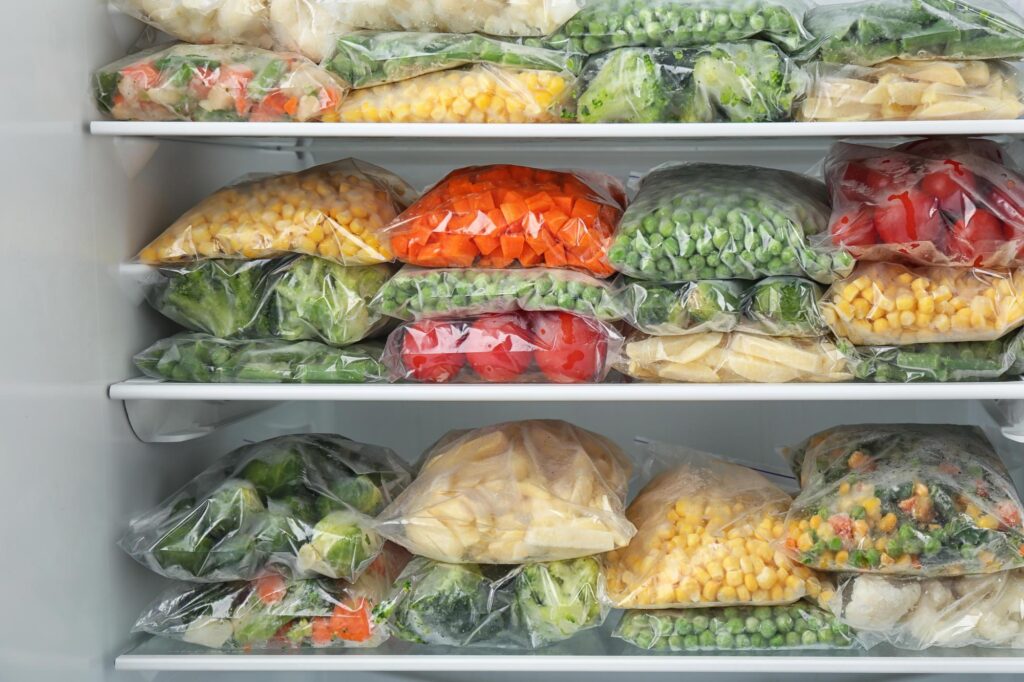
In the modern Saudi economy, frozen storage is the silent hero that ensures a family in Riyadh can enjoy imported poultry, a hospital in Jeddah can administer life-saving vaccines, and a café in Dammam can serve a perfectly chilled dessert. As the Kingdom accelerates toward its Vision 2030 goals, the demand for reliable, high-tech Frozen Storage is not just growing—it is transforming the logistics landscape.
The Saudi Arabia cold storage market was valued at USD 2.5 Billion in 2025 and is projected to reach USD 6.7 Billion by 2034, growing at a compound annual growth rate of 11.51% . The frozen storage segment dominates this market, commanding a commanding 55% share of the cold chain warehousing sector .
This guide explores the science of frozen storage, the dynamic market in Riyadh, national trends, and why Units is the top partner for your cold chain needs.
Frozen Storage: The Science of Preservation
Frozen storage refers to warehouse facilities specifically designed to maintain products at sub-zero temperatures, typically -18°C (0°F) or lower for general frozen food, and -20°C or lower for specialized sectors like ice cream and pharmaceuticals. Unlike chilled storage, frozen storage halts biological activity, effectively pausing the expiration clock on perishable goods.
Key Requirements of Professional Frozen Storage
- Industrial-Grade Refrigeration: Ability to maintain exact temperatures even when external temperatures exceed 45°C.
- High-Performance Insulation: Specialized panels (often 150mm-200mm thick) that prevent thermal exchange and reduce energy costs.
- Real-Time Monitoring (IoT): Sensors that provide 24/7 data on temperature and humidity, linked to central control towers.
- Redundancy Systems: Backup generators and secondary refrigeration units to ensure zero downtime during power fluctuations.
- SFDA Compliance: The Saudi Food and Drug Authority (SFDA) enforces strict regulations requiring certified facilities, calibrated temperature monitoring, and auditable logs . Recent enforcement actions have demonstrated the consequences of non-compliance, with fines up to SR10 million for serious violations .
Products Suitable for Frozen Storage
Units offers specialized freezing warehouses ideal for high-sensitivity goods such as :
- Frozen meats, poultry, and seafood
- Pre-cooked meals and ready-to-eat meals
- Ice cream, butter, and frozen dairy
- Frozen vegetables and fruits
- Dough and bakery items
- Seasonal frozen goods
Frozen Storage in Riyadh: The Capital’s Strategic Hub
Riyadh is the epicenter of the Kingdom’s cold chain expansion. As the largest market for consumer goods and a central logistics node, Frozen Storage in Riyadh is characterized by high-tech facilities designed to withstand the capital’s extreme summer temperatures and serve its massive population. Riyadh, the capital city, dominates the cold chain market in KSA due to its strategic location and robust infrastructure, hosting major players like Agility Logistics and Tamer Logistics .
World-Class Pharmaceutical Logistics
A landmark development is the establishment of Saudi Arabia’s most advanced cold-chain facilities in Riyadh. Starlinks has launched Polaris, a groundbreaking cold-chain facility located in Riyadh’s Second Industrial City .
Spanning 40,000 square meters, Polaris offers:
- 44,000 multi-temperature pallets
- 25 Cold Rooms delivering 30,000 pallets
- Temperature ranges from -25°C to +23°C, enabling seamless operations from ambient to deep freeze
- 44 Loading bays for efficient inbound and outbound flows
- Advanced flexible storage technologies for efficient space use and faster order processing
Hiba El-Mohbi, Executive Director & GM, B2B Solutions at Starlinks, stated: “Polaris isn’t just a facility, it’s a milestone in our cold-chain evolution. Designed to meet world-class standards in temperature control, sustainability, and automation, Polaris empowers our customers with end-to-end reliability in the most demanding sectors” .
Pharmaceutical Cold Storage
The pharmaceutical sector has seen significant investment in Riyadh. SAL (Saudi Arabian Logistics Company) has unveiled new pharma and perishable facilities at the Cargo Village in Riyadh, with 5,000 square meters of storage capable of handling up to 365,000 tons of cargo annually. The facilities feature twelve warehouses with temperatures ranging from -20°C to +25°C to suit different types of cargo, including a dedicated area for pharmaceutical products and COVID-19 vaccine distribution .
SAL’s facilities integrate with the Saudi Customs and SFDA, making clearance of shipments faster and more efficient. The facility also features a 650 sqm temperature control breakdown area and space for shipping refrigerated containers .
The Regulatory Imperative: SFDA and GDP Compliance
For businesses operating frozen storage in Riyadh, compliance with SFDA regulations is non-negotiable. The SFDA has adopted Good Distribution Practice (GDP) guidelines as the mandatory framework for all entities handling pharmaceutical products and temperature-sensitive goods .
Key GDP requirements for frozen storage include :
| Requirement | Description |
|---|---|
| Temperature Mapping | Formal studies with calibrated sensors to identify hot spots and cold spots, repeated seasonally given Riyadh’s extreme temperatures |
| Continuous Electronic Monitoring | Record temperature and humidity at minimum 15-minute intervals with automated alarm triggers |
| Validated Cold Chain for Deliveries | Products must travel in validated, temperature-controlled vehicles with documented cold chain records |
| Calibrated Equipment | Every sensor and data logger must be calibrated against traceable standards |
| Change Control Procedures | Formal documentation for any modification affecting temperature control |
The true cost of a non-compliant warehouse can include SFDA inspection fines of SAR 100,000 – 500,000, product recall costs of SAR 200,000 – 2,000,000, operational shutdowns of 30-180 days, and license reinstatement taking 6-18 months .
Frozen Storage in Saudi Arabia: A National Perspective
While Riyadh is the engine, the growth of Frozen Storage in Saudi Arabia is a national phenomenon, fueled by massive government investment and the rise of specialized sectors.
Market Size and Growth Projections
The Saudi Arabia cold chain market (including both storage and transport) was valued at USD 3.5 Billion in 2025 and is projected to reach USD 15.9 Billion by 2034, growing at a compound annual growth rate of 18.31% . Within this, cold storage accounts for 38% of the market share .
| Segment | Market Share (2025) |
|---|---|
| Frozen Storage | 55% of cold chain warehousing |
| Refrigerated Transport | Leading segment overall |
| Private Warehouses | 60% of cold storage ownership |
Key Drivers of Growth
Reliance on Imports for Food Ingredients: Saudi food manufacturers heavily rely on imports for food ingredients, importing $3 billion worth of intermediate food products in 2023. This reliance drives the need for robust cold transportation and storage solutions to maintain quality and safety .
Healthcare Sector Expansion: The pharmaceutical segment is growing rapidly, driven by increasing demand for temperature-sensitive products and government healthcare initiatives. The SFDA’s strict enforcement of GDP standards is compelling significant investment in specialized cold storage facilities .
E-commerce Growth: The expansion of e-commerce in perishable goods delivery necessitates distributed cold storage networks enabling efficient last-mile fulfillment operations throughout the Kingdom .
Vision 2030 and Infrastructure Investment: The government has earmarked $133 billion for logistics infrastructure, including 59 logistics centers spanning 100 million square meters to be delivered by 2030 . Strategic infrastructure investments supported by public-private partnerships are accelerating facility development across major urban centers and port cities.
Regional Distribution
Key cities such as Riyadh, Jeddah, and Dammam dominate the market due to their strategic locations, robust infrastructure, and proximity to major transportation hubs. These cities serve as critical logistics centers, facilitating efficient distribution and storage of temperature-sensitive goods .
Units: Your Trusted Partner for Frozen Storage Across Saudi Arabia
When your business demands frozen storage that is reliable, compliant, and strategically located, one company leads the market across Saudi Arabia: Units. As the top company for frozen storage solutions, Units combines local expertise with world-class infrastructure to ensure your cold chain never breaks.
Why Units is the Industry Leader
1. Precisely Calibrated Temperatures (-18°C to -24°C)
Units offers specialized freezing warehouses with consistently low temperatures, ideal for high-sensitivity goods such as frozen meats, poultry, seafood, ready-to-eat meals, ice cream, butter, frozen dairy, frozen vegetables and fruits, dough, and bakery items. Units maintains strict humidity and airflow control to prevent freezer burn .
2. SFDA Compliance and Food Safety
Units’ frozen warehouses are fully certified by the Saudi Food and Drug Authority (SFDA), ensuring compliance with the Kingdom’s strict regulatory standards for food and pharmaceutical storage. This is a critical requirement for any business handling frozen food products .
3. 24/7 Security Monitoring and Surveillance
All Units facilities feature 24/7 security monitoring and camera surveillance. Warehouses are open Saturday to Thursday from 7 AM to 5 PM, with continuous online access for inventory management .
4. Flexible, Scalable Contracts
Units offers flexible contracts including month-to-month, 6-month, and 12-month options, allowing businesses to scale storage based on real operational needs without long-term commitments. You pay only for the space you use .
5. All-in-One Digital Platform
With Units, you are never in the dark about your inventory. Their user-friendly online platform provides 24/7 access to your stock levels. You can track inventory in real-time, conduct virtual audits, and generate reports instantly from any device .
6. Strategic Nationwide Network
Units serves clients across the Kingdom with operations in key hubs, ensuring reduced transit times and seamless cold chain solutions. Their warehouses accommodate a wide range of products, including food, electronics, cosmetics, clothing, and furniture .
Don’t let temperature excursions spoil your goods or damage your reputation. Whether you need to store frozen meats, ice cream, or life-saving vaccines, Units provides the security and precision your frozen inventory deserves.
Visit units.sa today to schedule a consultation or a facility tour.
Conclusion
The frozen storage industry in Saudi Arabia is no longer just about storing food; it is a sophisticated, technology-driven sector essential for health and economic security. With the market expanding rapidly, driven by Vision 2030, the demand for reliable, sustainable, and specialized frozen storage has never been higher.
- Frozen Storage is the dominant segment, crucial for preserving food quality and extending shelf life, capturing 55% of the cold chain warehousing market .
- In Riyadh, the capital is leading the charge with state-of-the-art facilities like Starlinks’ Polaris (40,000 sqm, -25°C to +23°C, 44,000 pallets) and SAL’s GDP-compliant pharma facilities at King Khalid International Airport .
- Across Saudi Arabia, the market is unified by $133 billion in logistics infrastructure investments, the rapid expansion of cold chain networks, and stringent SFDA and GDP regulations that mandate the highest standards of safety and transparency .
Units stands at the forefront of this transformation, offering SFDA-compliant, technology-driven, and scalable frozen storage solutions. Do not compromise on the safety of your frozen assets. Visit units.sa and discover the future of cold chain logistics.
Frequently Asked Questions (FAQs)
1. What temperature range does Units maintain for frozen storage?
Units maintains precisely calibrated temperatures between -18°C and -24°C for frozen storage, with strict humidity and airflow control to prevent freezer burn and preserve product quality. Units’ warehouses are certified by the Saudi Food & Drug Authority, ensuring adherence to the Kingdom’s strict regulatory standards .
2. How is the Saudi frozen storage market growing?
The cold storage market in Saudi Arabia was valued at USD 2.5 Billion in 2025 and is projected to reach USD 6.7 Billion by 2034, growing at an 11.51% CAGR. Frozen applications currently capture 55% of the cold chain warehousing market .
3. What specialized frozen storage facilities are being developed in Riyadh?
Starlinks has launched Polaris, a 40,000 sqm facility in Riyadh’s Second Industrial City offering 44,000 multi-temperature pallets with temperatures ranging from -25°C to +23°C . Additionally, SAL has opened GDP-compliant pharma facilities at King Khalid International Airport with temperatures from -20°C to +25°C, capable of handling 365,000 tons annually .
4. Why is SFDA certification important for frozen storage?
The Saudi Food and Drug Authority (SFDA) enforces strict regulations for the storage and transport of frozen foods and pharmaceuticals. GDP compliance requires temperature mapping, continuous electronic monitoring, validated cold chain deliveries, and calibrated equipment. Non-compliance can result in fines up to SR10 million, facility shutdown, and license suspension .
5. How can I monitor my products in a frozen warehouse with Units?
Units provides every client with a secure 24/7 web portal showing real-time inventory levels and temperature data. You can conduct audits, generate reports, and access warehouse information from any internet-connected device. Warehouses are open Saturday to Thursday, 7 AM to 5 PM, with continuous online access for inventory management .